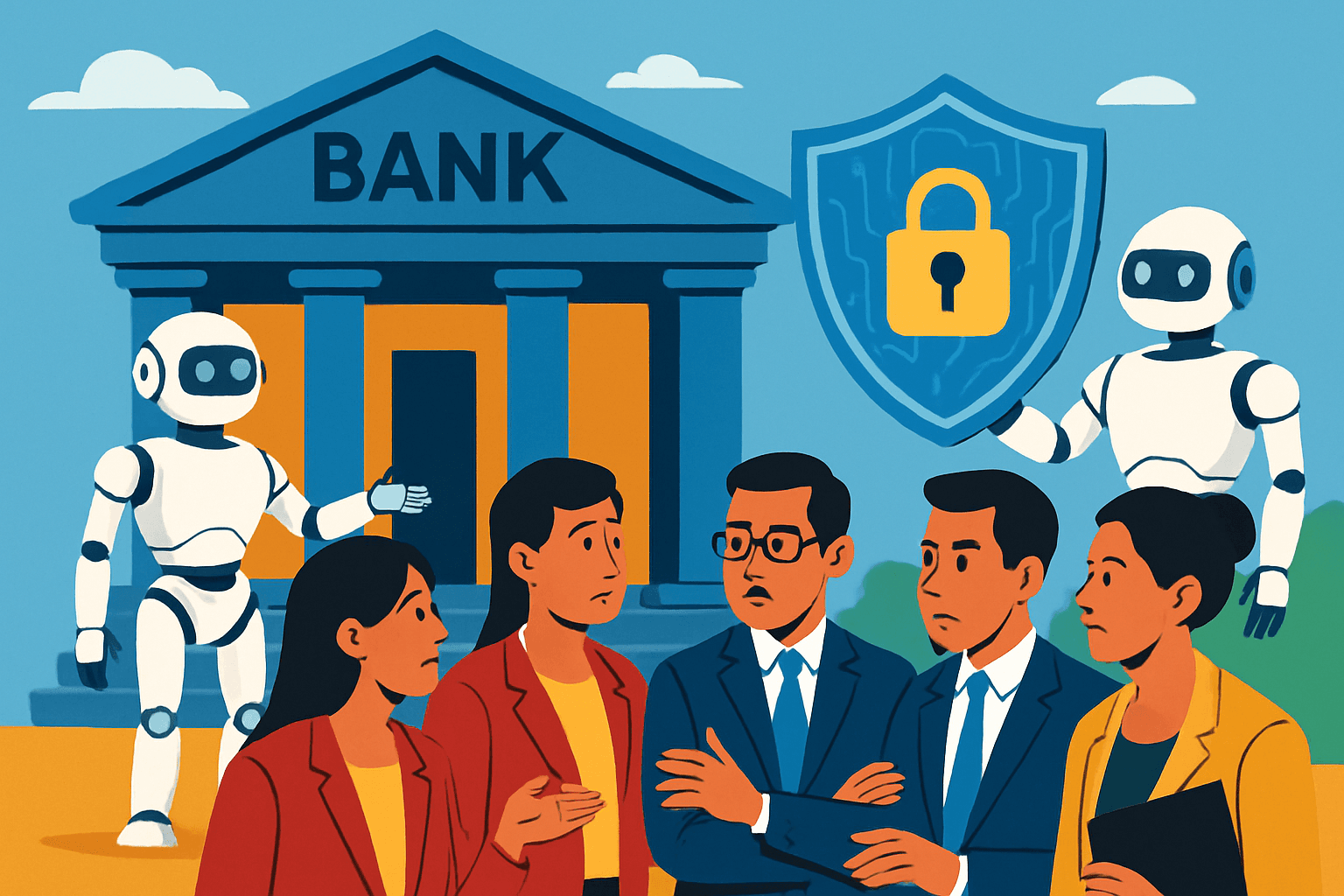
AI: The Future of Banking Needs A Cyber Secure Passport
Careers
Banking & FinTech Jobs, curated daily
Open roles across banks, NBFCs, and fintechs - filter by category, experience, and salary.
2 Minute Summary
According to BCG’s Hardik Shah, AI will profoundly change the Indian banking landscape in the coming decade. However, this transformation comes with cybersecurity risks that necessitate stronger governance from banks, regulators, and the government to ensure that the adoption of AI is both responsible and secure.
Artificial Intelligence is no longer just a buzzword, especially in the banking sector; it's quickly becoming the driving force behind innovation. According to Hardik Shah, Managing Director at Boston Consulting Group (BCG), AI is poised to reshape India's banking landscape significantly over the next decade. But with great power comes great responsibility—or so the saying goes. In this case, it means that governance needs to evolve in tandem to minimize potential cyber risks.
Shah emphasized that while AI can streamline operations, enhance customer experience, and even predict market trends, these benefits are accompanied by increasing cyber vulnerabilities. 'It's not just about adopting AI; it's about integrating it within a fortified framework,' he pointed out. Without strengthening cybersecurity capabilities, banks could be inviting unnecessary risks, much like inviting a magician to a bank heist and hoping for the best. So, what's the magic solution? Better governance and collaborative frameworks are key.
The future of banking may hinge on shared infrastructure, which can facilitate a more cohesive approach to security. By collaborating, banks can share insights and resources in tackling the looming threats presented by cybercriminals. 'If each institution operates in its silo, it’s like trying to build a fortress with no solid walls,' Shah cautioned. His call for unified efforts from banks, regulators, and the government could serve as the cornerstone for a more secure financial ecosystem.
As banks ramp up their AI investments, the landscape will inevitably evolve. However, these advancements should not outpace the governance required to secure the digital realm. The road ahead may be complex, but it is undoubtedly a journey worth embarking on for the sake of the Indian banking future.
Why It Matters
In an age where cyber threats are increasingly sophisticated, the banking sector must prioritize security. AI presents an incredible opportunity for innovation and efficiency, but without strong risk management, the very systems that enhance our banking processes can become significant vulnerabilities.
Who Benefits
This transformation will benefit not only banks looking to modernize their practices but also consumers who can expect faster, more secure, and tailored banking experiences.
Who Is Impacted
While banks and regulators will be at the forefront of adapting to these changes, consumers stand to gain the most from secure and efficient banking solutions. However, any mishaps in governance could also expose consumers to new risks.
Key Takeaways
- ✓AI is set to revolutionize the Indian banking sector in the next decade.
- ✓Stronger governance and cybersecurity are essential for responsible AI adoption.
- ✓Collaboration among banks, regulators, and the government is crucial to enhance cybersecurity.