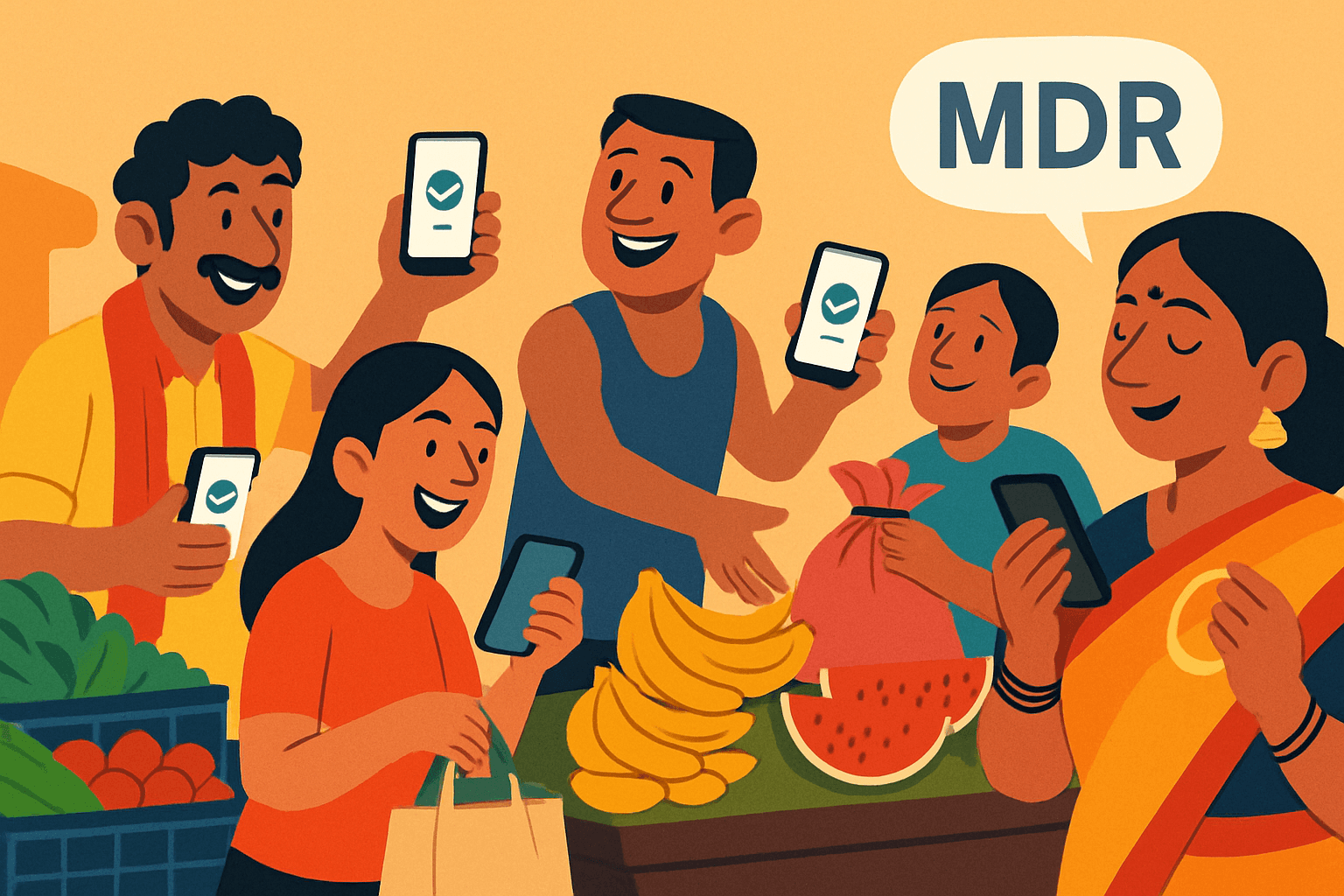
Decoding UPI MDR: Who Pays the Bill?
Careers
Banking & FinTech Jobs, curated daily
Open roles across banks, NBFCs, and fintechs - filter by category, experience, and salary.
2 Minute Summary
The Indian government has made it clear that UPI (Unified Payments Interface) will continue to be free for consumers and small merchants. However, under the new rules, a Merchant Discount Rate (MDR) may apply to select transactions that exceed a certain amount. This means while most day-to-day payments remain cost-free, larger transactions could attract fees – but don’t worry, it won’t be your average chaiwala who gets hit!
In a world where convenience often comes with a price tag, the Indian government has decided to keep things sweet for UPI users. That's right – consumers and small merchants won’t have to dig deep into their wallets to pay for their daily transactions. The decision means that UPI, which has become the go-to payment method for millions, will stay free for most users.
However, it’s not all sunshine and rainbows. For transactions surpassing a specified threshold, a Merchant Discount Rate (MDR) might kick in. This applies mainly to larger amounts. So, if you're someone who prefers splurging on a luxurious dinner using UPI, brace yourself for a potential fee. But, for everyday purchases – whether it’s your daily dose of coffee or those small purchases at the local market – you're still in the clear.
One thing is crystal clear: the government is ensuring that the benefits of UPI remain accessible to everyone, particularly small merchants who rely on this system to conduct their business. The idea is to keep the wheels of commerce turning without adding unnecessary financial hurdles. After all, who wants to buy their mom’s favorite sweets only to find out there’s an extra charge for using UPI? No one, that’s who.
As it stands, while some larger transactions may see an MDR attached, the vast majority, especially those involving our friendly neighborhood vendors, remain unaffected. The aim is to strike a balance between facilitating digital payments and ensuring that businesses, especially the smaller ones, don’t face the brunt of extra costs. It looks like our digital payment ecosystem is here to stay, with room for improvement that benefits everyone.
Why It Matters
This clarification from the government ensures that digital payments remain accessible to all, thereby supporting India's goal of financial inclusion. By keeping UPI free for most transactions, it promotes widespread adoption of cashless transactions, particularly among small vendors and everyday consumers.
Who Benefits
Consumers and small merchants are the biggest beneficiaries of this decision, as it allows for seamless transactions without extra fees. The clarity also encourages small businesses to adopt UPI without fear of incurring costs.
Who Is Impacted
While the average consumer and small merchant will likely feel no change in their daily transactions, larger businesses and certain high-value transactions may have to account for MDR in their operations, leading to potential adjustments in payment strategies.
Key Takeaways
- ✓UPI remains free for consumers and small merchants.
- ✓MDR will only apply to specific high-value transactions.
- ✓The policy aims to ensure digital payment access for everyone.
- ✓Higher transaction costs won't impact everyday purchases.