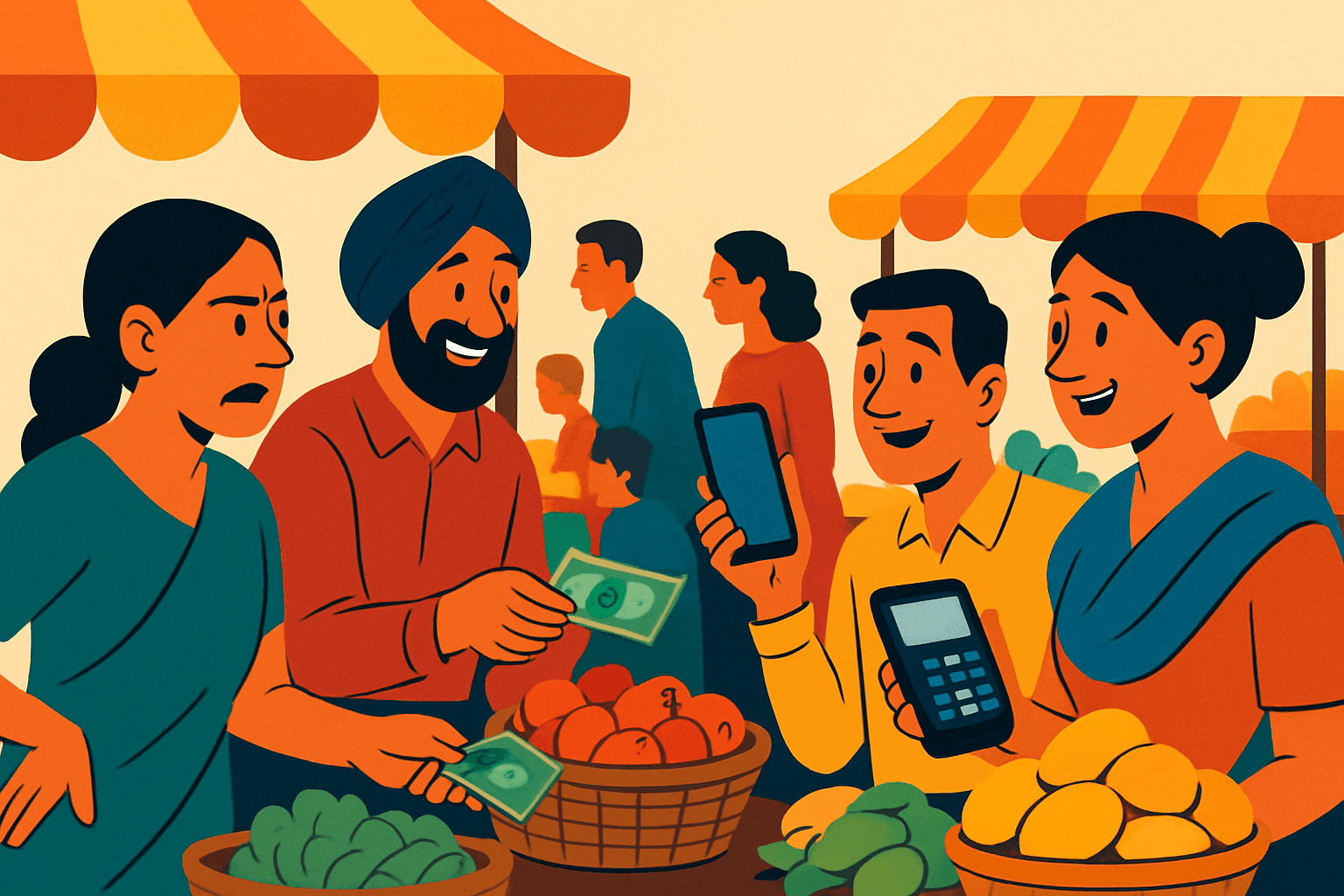
Is Cash Making a Comeback? Exploring the Recent Rise in Cash Transactions
Careers
Banking & FinTech Jobs, curated daily
Open roles across banks, NBFCs, and fintechs - filter by category, experience, and salary.
2 Minute Summary
It seems cash is trying to stage a comeback in the ongoing digital age. Recent reports indicate that while UPI transactions are gaining ground, cash use is seeing a resurgence. This could be due to concerns over potential fees associated with digital transactions, hinting at a possible shift back to good old-fashioned cash if charges come into play.
In what seems like a curious case of reverse migration, cash is beginning to find its way back into the hands of the public, reaching a staggering ₹41.8 lakh crore. This resurgence raises some eyebrows, especially as we sit on the threshold of a digitally dominated economy. With UPI transactions gaining popularity, many are wondering if cash is staging its own comeback tour.
Currently, transactions made via the Unified Payments Interface (UPI) come with no charges, making it a no-brainer for customers who prefer the simplicity of digital payments. However, whispers in the market suggest that if Merchant Discount Rate (MDR) charges are passed down to consumers, the public's heart may flutter back to cash—a form of payment that, depending on the day, can feel both nostalgic and reliable.
Reports indicate that the margin between cash and UPI transactions is narrowing, showing a potential tug-of-war between the two that could evolve as new policies come into play. The prospect of paying for UPI transactions might prompt many to reconsider their choices, leading to that age-old question: 'Would you prefer paying cash or a fee for convenience?'
For businesses and consumers alike, this shift could have various implications. If more people opt for cash due to charges associated with UPI, businesses might have to revamp their payment strategies to accommodate a clientele that prefers the physicality of currency. As we continue down this rabbit hole of digitalization, it seems that cash isn't quite ready to be buried just yet.
Why It Matters
This trend could have significant implications for businesses and the economy as a whole. A shift back to cash might influence how services are delivered and could also affect the cost structures of traditional and digital payment platforms.
Who Benefits
Smaller businesses, in particular, may benefit from a trend towards cash, as it avoids the associated transaction fees with digital payments, allowing them to retain more of their earnings.
Who Is Impacted
Consumers who prefer the convenience of digital payments may feel the pinch if charges are introduced, forcing them to reconsider their payment preferences.
Key Takeaways
- ✓Cash transactions have surged to ₹41.8 lakh crore, indicating a potential comeback.
- ✓UPI currently has no charges, but if this changes, consumers may lean back to cash.
- ✓The narrowing margin between cash and UPI transactions suggests changing consumer preferences.