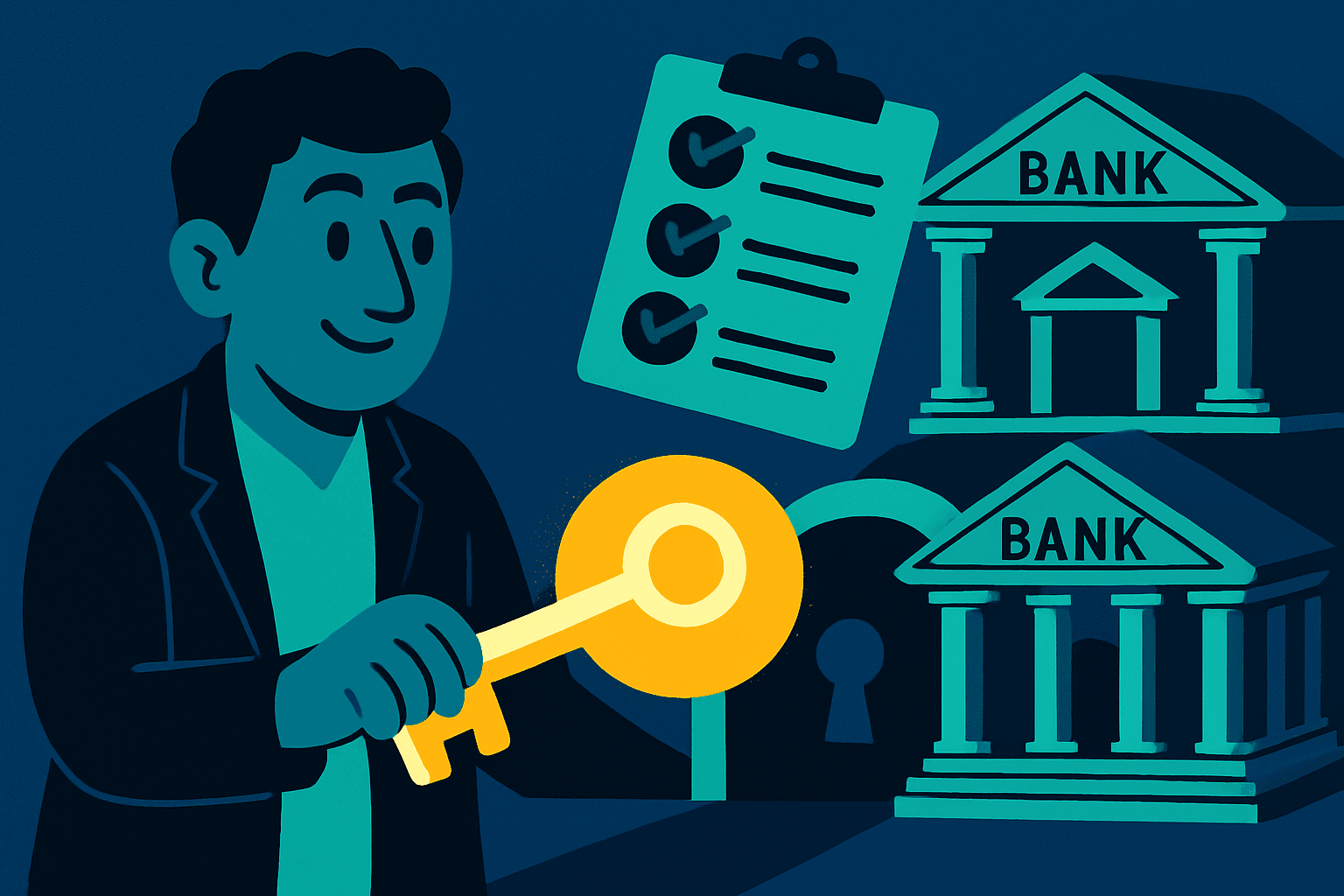
Open Banking Explained: Your Data, Shared With Your Permission
Careers
Banking & FinTech Jobs, curated daily
Open roles across banks, NBFCs, and fintechs - filter by category, experience, and salary.
2 Minute Summary
Open banking lets a customer securely share their financial data across institutions with explicit consent, powering everything from instant loan approvals to apps that show every bank balance in one screen.
In India, open banking is largely built on the Account Aggregator framework - a consent-based system where a customer can authorize one institution, like a lender, to securely view specific financial data held at another, like their salary account at a different bank.
Crucially, the data itself never sits with the aggregator permanently - it's a consent-managed pipe that moves data directly between the source institution and the requesting institution, with the customer approving exactly what's shared and for how long.
This is what allows a lender to instantly verify a borrower's actual bank statements and income for an underwriting decision in minutes, instead of the borrower manually uploading PDF statements that then get typed in and verified by hand.
It also powers personal finance apps that show balances and transactions from every linked bank account in one screen, something that previously required screen-scraping techniques operating in a regulatory grey zone.
Why It Matters
It shifts control of financial data to the customer, who grants and revokes access explicitly, rather than leaving data sharing to informal or insecure workarounds.
Who Benefits
Borrowers get faster loan approvals and consumers get unified financial visibility across all their accounts.
Who Is Impacted
Manual underwriting processes and screen-scraping personal finance apps lose relevance to faster, more secure consent-based data sharing.
Key Takeaways
- ✓India's open banking model is built on consent-based Account Aggregators, not raw data storage.
- ✓Data moves directly between institutions with explicit customer approval, not through a middleman database.
- ✓It enables faster loan underwriting and unified personal finance apps built on secure, consented data.