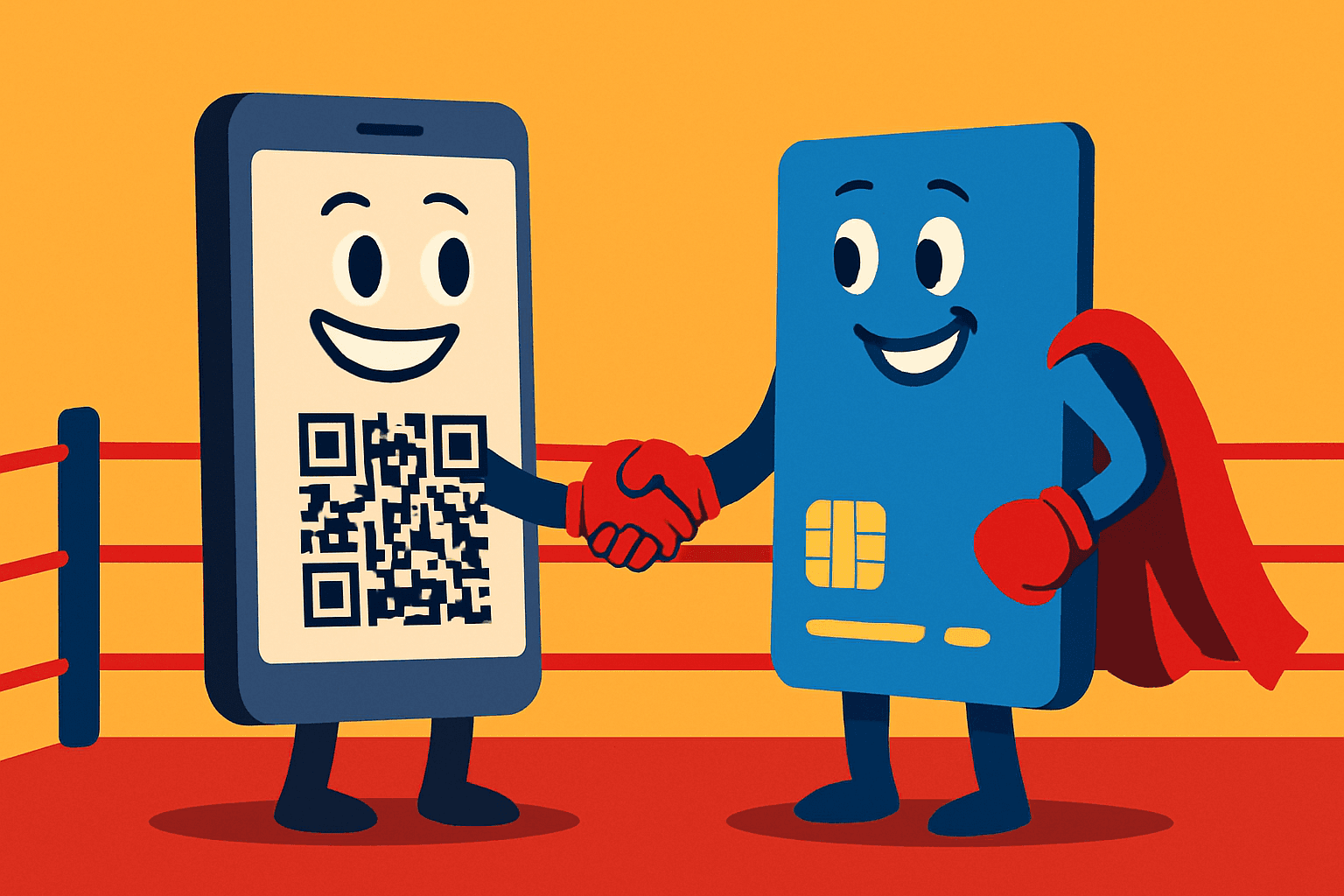
UPI vs Cards: Why India Chose a Different Path
Careers
Banking & FinTech Jobs, curated daily
Open roles across banks, NBFCs, and fintechs - filter by category, experience, and salary.
2 Minute Summary
Cards took decades to reach mass adoption worldwide because they needed expensive point-of-sale hardware and charged merchants a fee on every transaction. UPI skipped both problems, which is why it overtook cards in India in a fraction of the time.
A card payment routes through four parties - the customer's bank, the merchant's bank, and the card network in between - each taking a small cut of the transaction as a merchant discount rate. That fee, typically 1-2% of the transaction value, is why many small Indian merchants historically refused to accept cards.
UPI removes the card network entirely. Money moves bank to bank directly, so there is no network fee to pass on. A ten rupee cup of tea can be paid for by UPI as cheaply as a ten thousand rupee purchase, which simply was not economical for card networks built around a per-transaction fee model.
Cards still win on some fronts: they offer credit (buy now, pay later within a billing cycle), rewards points, purchase protection, and work internationally in a way domestic UPI historically did not, though UPI's international rollout in select countries is changing that.
The two are increasingly complementary rather than competitive - RuPay credit cards now link directly to UPI, letting users get card-style credit while still paying through a UPI QR code.
Why It Matters
The cost structure difference explains why UPI succeeded at reaching small merchants where cards, globally, largely failed to.
Who Benefits
Small merchants and low-value transactions benefit most from UPI's zero-fee model; cardholders who want credit and rewards still lean on cards.
Who Is Impacted
Card networks lose transaction volume and the fee income tied to it, pushing them to integrate with UPI rather than compete against it directly.
Key Takeaways
- ✓Card payments carry a merchant fee that UPI's bank-to-bank model avoids entirely.
- ✓That cost difference is the main reason UPI reached small merchants faster than cards ever did.
- ✓RuPay credit cards linking to UPI is merging the two models rather than one replacing the other.